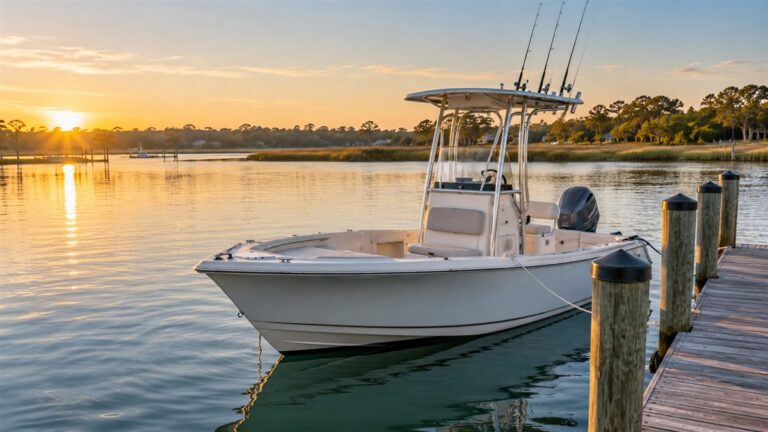
Quick answer: This Coast Guard boat safety checklist starts with a simple point: buying every linked item will not make your boat Coast Guard ready or guarantee that you will pass an inspection. First match the federal and state rules to your boat, passengers, waters, and trip. Then verify that each required item is approved, correctly sized or installed, serviceable, and accessible. The product links below are examples, not a compliance determination.
Before you launch: Use the Coast Guard federal requirements guide and your state boating agency’s current rules to check your actual vessel. A free Coast Guard Auxiliary Vessel Safety Check can catch missing equipment before you go. A check or decal reflects the boat at the time examined; it is not immunity from a later boarding or citation.
What Coast Guard ready means for your boat
Coast Guard ready is a useful goal, not a certificate you get by filling a cart. Federal rules set a minimum; state rules may add to them. A sound safety check also asks whether the gear is in working order and the operator knows how to use it.
Before buying anything, write down these details. They decide which parts of this guide apply:
| Check your boat and trip | What it can change |
|---|---|
| Length and vessel type | Throwable flotation, fire-extinguisher quantity, sound equipment, and some exceptions. |
| Propulsion, fuel tank, and enclosed spaces | Fire protection, ventilation, backfire flame control, and engine cut-off switch rules. |
| Coastal, Great Lakes, or inland waters | Whether visual distress signals are required and which local rules apply. |
| Day, night, or restricted visibility | Distress-signal combination and when navigation lights must be displayed. |
| People aboard, especially children | Life-jacket sizes, quantity, and wear requirements. |
| State, registration, and operator | Numbering or documentation, decals, boater education, and additional equipment. |
The sections below separate generally required equipment, items that depend on your boat or trip, and recommended backup gear. Every linked product is an example to evaluate against your own requirements. If you cannot confirm a rule or fit, do not assume the purchase solves it.
Coast Guard boat safety checklist: what to verify
1. A Wearable Life Jacket for Every Person
Generally required: Carry a U.S. Coast Guard-approved wearable life jacket in good, serviceable condition and in the correct size for each person aboard. Keep it readily accessible. An adult four-pack covers only four appropriately sized adults; it does not cover a fifth person or a child. Federal law generally requires children under 13 to wear a life jacket while underway unless below deck or in an enclosed cabin; check stricter state rules and label conditions for inflatables.
For a basic adult guest set, the Onyx Adult General Purpose Life Jacket 4-Pack is one practical option. Comfortable inflatable models can encourage all-day wear, but they have user restrictions and maintenance requirements that must be checked on the label.
2. Throwable Flotation Where Required
Depends on length and vessel type: Most recreational boats 16 feet and longer must also carry an approved throwable flotation device, with exceptions that include certain canoes and kayaks. It must be immediately available—not buried under gear. A cushion counts only if its approval label says it does. Every passenger should know where it is and how to throw it.
The Onyx Throwable Foam Cushion is one practical option. Confirm the approval label rather than assuming any cushion or flotation toy qualifies.
3. The Correct Marine Fire Extinguisher
Depends on the boat: A permanently installed fuel tank or a space that can trap flammable vapors can trigger a marine fire-extinguisher requirement. An outboard boat under 26 feet with only a portable fuel tank and no vapor-trapping space may be exempt. If one is required, use the Coast Guard table to determine the right rating and quantity for the boat’s length, model year, and any fixed system. Keep it readily accessible and serviceable; check its approval label, gauge, pin, nozzle, damage, and date. Disposable extinguishers more than 12 years past manufacture do not count.
The Kidde Mariner 5 is one marine fire-extinguisher option. Match any extinguisher to the Coast Guard requirements for your vessel; do not buy by product name alone.
4. Current Visual Distress Signals
Depends on waters, boat, and time: Visual distress signals are required on U.S. coastal waters, the Great Lakes, territorial seas, and qualifying connected waters. Some boats, including recreational boats under 16 feet, are exempt from carrying daytime signals but still need night signals when operating after sunset. For other trips, verify a complete day-and-night combination. Approved pyrotechnic signals must be current, serviceable, and readily accessible; expired flares may be extras but do not count.
Store signals where they stay dry but can be reached quickly. Make sure the crew understands the directions before an emergency. If you use an electronic visual distress signal, verify that its approval and accompanying daytime signal satisfy the rules for your operation.
The Orion 584 Alerter Basic flare kit includes a 12-gauge signal launcher and four aerial flares. Check the markings on the actual flares: do not assume this kit alone meets your daytime requirement. Confirm the required signal type and number, expiration dates, and safe storage before relying on it. Use flares only in a real distress situation.
5. An Efficient Sound-Producing Device
Generally required: A human voice does not count as a sound-producing device. Boats under 12 meters need a way to make an efficient sound signal; larger vessels have more specific equipment requirements. Test the installed horn, know the navigation sound signals, and keep a backup that works if electrical power fails.
The Shoreline Marine Handheld Air Horn is a simple independent option. Whether you use a horn or suitable whistle, keep it accessible from the helm.
6. Working, Legal Navigation Lights
Required when operating at night or in restricted visibility: Display the correct navigation-light configuration for your vessel and activity from sunset to sunrise and when visibility is restricted. Decorative LEDs and unapproved replacements do not substitute. Test the installed lights, clean cloudy lenses, and confirm the required visibility arcs are not blocked by the motor, gear, or crew.
For boats with compatible sockets, the Perko 1612DP3BLK removable bi-color bow pole and Perko 1440DP2ALU white all-round LED plug-in pole are two socketed options. Check each light’s approval and match the socket, pin, collar, pole height, visibility arc, and your boat’s required light configuration before ordering. Confirm whether a compatible mounting base is included or sold separately.
7. The Engine Cut-Off Switch Link
Depends on the boat and how it is operated: The federal engine cut-off switch rule covers certain powered recreational boats under 26 feet when operated on plane or above displacement speed. The installation and use rules differ by build date and whether a working switch is installed; an enclosed primary helm is among the exceptions. The link may be a physical lanyard or an approved wireless system. Check the Coast Guard FAQ for your boat, clip in when required, and test the system as directed.
The Attwood 7591-6 universal boat kill-switch lanyard is a replacement option. Match the key to your actual switch and test that pulling the lanyard stops the engine; “universal” does not guarantee a fit on every helm.
8. Marine Communication and a Distress Plan
Recommended for a typical small coastal recreational boat, not a universal federal carriage requirement: A marine VHF lets you monitor traffic and weather and call the Coast Guard and nearby vessels on Channel 16. A fixed-mount radio with Digital Selective Calling (DSC), position data, a registered MMSI, and a suitable antenna offers stronger distress capability; a floating handheld is a useful independent backup. Learn the distress procedure before you need it.
The Standard Horizon GX1410GW fixed-mount VHF/GPS has built-in GPS and Class D DSC. Install it with a suitable antenna, register and enter an MMSI, then test the radio so the distress features are ready to use.
The floating, submersible Uniden Atlantis 275 handheld marine VHF is one independent communication option. A cell phone is useful, but it should not be your only offshore communication plan.
9. Documents, State Equipment, and a Real Pre-Departure Check
Check these even after buying the gear: Carry the registration or documentation required for your vessel, display numbers and validation decals correctly, obey capacity limits, and meet operator-education rules in the state where you run. Boat design and use may add ventilation, backfire flame control, pollution or garbage placards, and sanitation requirements. Do not infer that these do not apply merely because they are not in a shopping list.
Before leaving the ramp, inspect fuel and battery connections, bilge and drain plugs, steering, throttle, propeller area, navigation lights, safety gear, and the weather. File a float plan with someone ashore. Carry an anchor and adequate rode, a first-aid kit, waterproof flashlight, basic tools, spare fuses, drinking water, and protection from exposure. These items are not all universal federal carriage requirements, but they are part of a prepared boat.
The best final check is a free Vessel Safety Check
Before you rely on this Coast Guard ready checklist, request a free Coast Guard Auxiliary Vessel Safety Check. A trained examiner reviews the boat and applicable equipment in person. If something is missing, you get a report to fix it, not a citation from the courtesy check. Passing earns a decal for the boat as examined; it does not guarantee that conditions, equipment, or legal requirements will be the same on a later trip, and it does not prevent an enforcement boarding.
Bring your registration or documentation, operator education card if your state requires one, and the actual gear you plan to carry. Ask about the boat-specific items you are unsure of. This is more useful than assuming that every Amazon example on this page fits your boat.
A Two-Minute Dockside Check
- One properly fitted wearable PFD for every person; throwable device accessible where required.
- Required fire extinguisher type and quantity confirmed for this boat; each is serviceable and reachable.
- Required daytime and nighttime distress-signal combination confirmed for these waters and hours; every signal is current.
- Sound device works; installed navigation lights show the correct configuration when required.
- Engine cut-off link connected when required.
- VHF charged, Channel 16 available, and DSC/MMSI configured if equipped.
- Registration or documentation, state education and equipment rules, capacity, drain plug, fuel, battery, bilge, steering, anchor, and first-aid gear checked.
- Weather, marine alerts, tides, inlet conditions, route, and return window reviewed.
- Float plan left with a reliable person ashore.
Check conditions before you launch
Required equipment prepares the boat for an emergency. It does not make poor conditions safe. Review wind, gusts, seas, tides, official alerts, and visibility before leaving the dock. Wave Angler’s coastal forecast guide can help you weigh the trip window for your boat and crew; it does not replace official warnings or your own judgment.
Official Safety References
- U.S. Coast Guard: A Boater’s Guide to Federal Requirements for Recreational Boats(PDF)
- U.S. Coast Guard boating safety FAQ
- U.S. Coast Guard Navigation Center: boating radio tips
- National Weather Service: safe boating before you go
- U.S. Coast Guard: fire-extinguisher FAQ
- U.S. Coast Guard: engine cut-off switch FAQ
- Coast Guard Auxiliary: free Vessel Safety Check
Frequently Asked Questions
Will buying every linked product make my boat compliant?
No. This Coast Guard ready guide helps you identify what to verify; it cannot certify your specific boat. A four-pack of adult life jackets may not fit your crew, a single extinguisher may be the wrong quantity, a flare kit may not cover both day and night, and replacement lights or a lanyard may not fit. Use the federal guide, your state boating agency, and a Vessel Safety Check before treating the boat as ready.
Will a Vessel Safety Check decal keep me from getting a ticket?
No. The free courtesy check examines the boat at that time and can help you catch missing equipment without a citation from the check itself. The decal is not a waiver of later laws or a substitute for carrying and using the required gear on every trip.
Does every small boat need a VHF radio?
Not every small recreational boat is federally required to carry one. For coastal boating, however, a marine VHF provides direct access to Channel 16, nearby vessels, and marine safety information, making it one of the most useful recommended safety upgrades.
Do expired flares still count?
No. Expired pyrotechnic signals may be carried as extras, but they do not count toward a current visual-distress-signal carriage requirement.
What should I buy after the required gear?
Prioritize the failure points that can turn a delay into an emergency: dependable VHF communication, anchor and adequate rode, first-aid supplies, waterproof flashlight, basic tools, spare fuses, bilge capability, drinking water, exposure protection, and dry storage. Fishing conveniences come after the safety system is complete.
As an Amazon Associate, Wave Angler earns from qualifying purchases.